
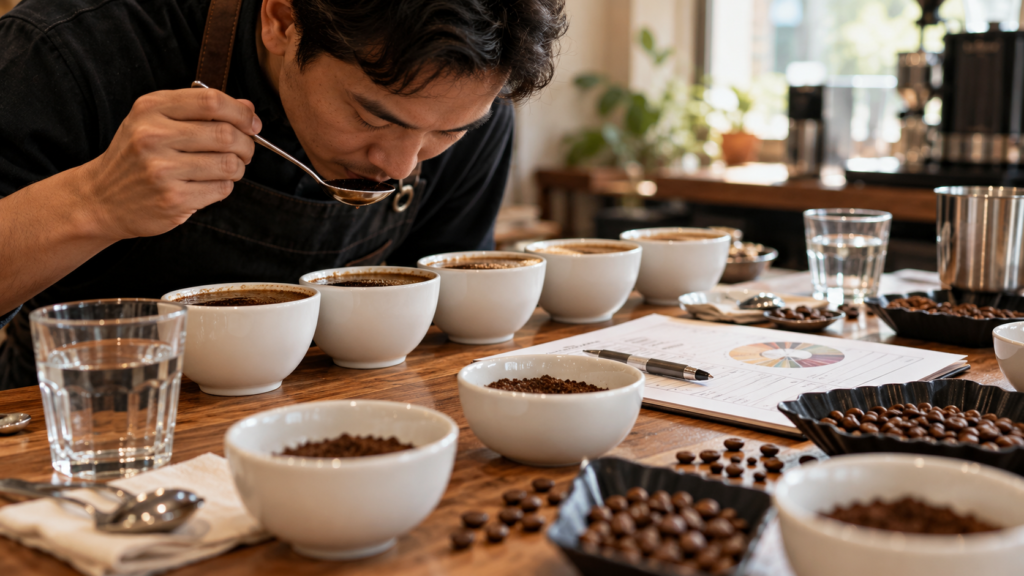
Coffee Cupping: A Professional Technique for Evaluating Coffee Flavor
If you have ever seen a barista or coffee roaster loudly slurping coffee as if they were tasting hot soup, there is a good chance they were doing coffee cupping.
To someone unfamiliar with the coffee industry, coffee cupping may look a little unusual. However, in the professional coffee world, it is one of the most widely used methods for evaluating coffee quality, aroma, and flavor.
Many specialty coffees go through a cupping process before they reach the market. This helps coffee professionals understand the characteristics of the beans, identify potential defects, and maintain product consistency.
In this article, we will explore what coffee cupping is, why it is important, how the cupping process works, and how you can try coffee cupping at home.
What Is Coffee Cupping?
Coffee cupping is a standardized method used to evaluate the aroma, flavor, and overall quality of coffee through a consistent tasting process.
The technique is widely used by coffee professionals around the world, including:
- Coffee roasters
- Q Graders
- Baristas
- Green coffee buyers
- Coffee producers
- Coffee enthusiasts
Simply put, coffee cupping is a structured way of tasting and evaluating coffee.
Unlike casually drinking a cup of coffee, cupping uses consistent parameters so that different coffees can be compared under similar conditions.
By controlling variables such as coffee dose, grind size, water temperature, and brewing time, tasters can focus more accurately on the natural characteristics of the coffee itself.
Why Is Coffee Cupping Important?
Coffee cupping plays an important role throughout the coffee supply chain.
From evaluating green coffee before purchase to checking the consistency of roasted coffee, cupping allows professionals to better understand the quality and characteristics of each coffee.
1. Quality Control
Coffee roasters commonly use cupping as part of their quality control process.
By regularly tasting roasted coffee, they can monitor whether each batch meets the desired flavor profile and quality standards.
If something tastes noticeably different, cupping can help identify potential issues with roasting, green coffee quality, or production consistency.
2. Evaluating Coffee Flavor Profiles
Every coffee has its own unique sensory characteristics.
Coffee cupping helps tasters identify flavor notes such as:
- Fruity
- Nutty
- Chocolatey
- Floral
- Spicy
- Sweet
- Earthy
These flavor characteristics can vary depending on factors such as coffee origin, variety, processing method, altitude, roasting profile, and brewing conditions.
3. Maintaining Product Consistency
Consistency is extremely important in the coffee industry.
If the flavor of one production batch differs significantly from another, coffee cupping can help detect the difference before the product reaches customers.
Regular cupping allows roasters and coffee businesses to monitor changes and maintain a more consistent product.
4. Coffee Education and Training
Coffee cupping is also commonly used for sensory training.
Baristas, roasters, and production teams can use cupping sessions to develop their ability to recognize different aromas, flavors, textures, and levels of acidity.
Over time, regular cupping can improve sensory awareness and help coffee professionals describe coffee more accurately.
Equipment Needed for Coffee Cupping
One of the advantages of coffee cupping is that the equipment required is relatively simple.
Basic coffee cupping equipment includes:
- Coffee grinder – for grinding coffee beans
- Digital scale – for accurately measuring coffee and water
- Cupping bowls or cups
- Cupping spoon
- Hot water
- Coffee flavor wheel – optional, but helpful for identifying flavor characteristics
In professional cupping environments, equipment, coffee dosage, water, grind size, and other variables are usually standardized to make comparisons as consistent as possible.
Coffee Cupping Process: Step-by-Step
The coffee cupping process may look highly technical, but the basic method is relatively straightforward.
Here is a simplified step-by-step guide to how coffee cupping works.
1. Grind the Coffee
Coffee beans are typically ground to a medium-coarse consistency.
A commonly used starting ratio is approximately:
- 8.25 grams of coffee
- 150 ml of water
The exact ratio may vary depending on the cupping protocol being followed.
The important point is to keep the coffee-to-water ratio consistent across all samples being compared.
2. Smell the Dry Aroma
Before adding water, smell the freshly ground coffee.
This stage allows you to evaluate the dry fragrance of the coffee.
You may notice aromas such as:
- Floral
- Sweet
- Fruity
- Earthy
- Nutty
- Spicy
Try to observe the aroma without immediately deciding whether you like or dislike it.
The purpose of cupping is to identify what is present in the coffee as objectively as possible.
3. Add Hot Water
Pour hot water directly over the coffee grounds.
During traditional coffee cupping, the coffee is generally left undisturbed after pouring.
As the coffee brews, a layer of floating coffee grounds known as the crust begins to form on the surface.
The coffee is typically allowed to steep for around four minutes before the next stage.
4. Break the Crust
After the steeping period, the crust is gently broken using a cupping spoon.
As the spoon moves through the coffee grounds, lean closer and smell the aroma released from the cup.
This is an important stage because breaking the crust often releases intense aromatic compounds.
The remaining floating coffee grounds are then usually removed from the surface before tasting.
5. Taste the Coffee by Slurping
Now comes the part that makes coffee cupping instantly recognizable: slurping.
Using a cupping spoon, tasters quickly slurp the coffee into their mouths.
Why slurp the coffee?
Slurping helps spread the liquid across the palate while also carrying aromatic compounds toward the nasal cavity. This allows the taster to evaluate flavor and aroma more effectively.
Although it may sound unusual, slurping is an important sensory technique during professional coffee tasting.
What Is Evaluated During Coffee Cupping?
Coffee cupping is more than simply deciding whether a coffee tastes good or bad.
Instead, coffee is evaluated through a structured sensory process that looks at several characteristics.
Some of the most important aspects include:
Aroma
Aroma refers to the smell of the coffee before and after brewing.
During cupping, tasters evaluate characteristics such as:
- Intensity
- Sweetness
- Complexity
- Cleanliness
- Distinctive aromatic notes
A coffee may have floral, fruity, chocolatey, spicy, herbal, or other aromatic characteristics.
Acidity
In coffee tasting, acidity does not simply mean that coffee tastes unpleasantly sour.
Instead, coffee acidity often describes the brightness, liveliness, or crispness of the flavor.
Acidity can be described as:
- Bright
- Crisp
- Juicy
- Mellow
- Delicate
- Flat
Different coffee origins and processing methods can produce very different types of acidity.
Body
Body describes the physical sensation or weight of the coffee in your mouth.
Coffee body can range from:
- Light
- Smooth
- Silky
- Creamy
- Medium
- Heavy
Body is influenced by the coffee variety, processing method, roasting profile, and brewing method.
Flavor
Flavor refers to the overall taste experience of the coffee.
During cupping, tasters may identify flavor notes such as:
- Fruity
- Chocolatey
- Nutty
- Floral
- Caramel-like
- Spicy
- Herbal
These descriptions help communicate the unique characteristics of a particular coffee.
Aftertaste
Aftertaste is the flavor that remains in your mouth after the coffee has been swallowed or spit out.
A good aftertaste is often described as:
- Clean
- Pleasant
- Sweet
- Smooth
- Long-lasting
An unpleasant aftertaste may feel excessively bitter, harsh, dry, or unbalanced.
By evaluating all of these characteristics together, coffee cupping provides a more complete understanding of a coffee’s sensory profile.
Coffee Cupping vs Regular Coffee Drinking
At first glance, coffee cupping may seem similar to simply drinking coffee.
However, the two activities have very different purposes.
Coffee cupping is designed to evaluate coffee under controlled conditions, while everyday coffee drinking is generally focused on enjoyment and personal preference.
Coffee Cupping
- Uses direct immersion brewing
- Follows consistent parameters
- Focuses on aroma and flavor analysis
- Uses a structured and controlled approach
- Designed to evaluate coffee quality
- Makes it easier to compare multiple coffees
Regular Coffee Drinking
- Can use different brewing methods such as V60, espresso, French Press, or coffee machines
- Brewing parameters can vary depending on preference
- Focuses primarily on enjoyment
- Usually follows personal taste
- Designed for everyday consumption
In simple terms:
Coffee cupping = evaluation
Coffee drinking = experience
Both are valuable, but they serve different purposes.
Can You Try Coffee Cupping at Home?
You do not have to be a professional roaster or Q Grader to try coffee cupping.
A simple home cupping session can be a great way to develop your palate and compare different coffees.
Start with two or three different coffee beans. Try to keep the brewing variables consistent and taste each coffee side by side.
Instead of immediately asking yourself which coffee you like best, focus on questions such as:
- Which coffee smells sweeter?
- Which one has more noticeable acidity?
- Which coffee feels heavier in the mouth?
- Can you identify fruit, chocolate, nut, floral, or spice notes?
- Which coffee has the longest aftertaste?
The more coffees you taste comparatively, the easier it becomes to recognize differences between them.
Conclusion
Coffee cupping is a standardized sensory evaluation method used to understand coffee quality, aroma, flavor, acidity, body, and aftertaste.
For coffee roasters, cupping is an essential tool for quality control and maintaining consistency.
For baristas and coffee professionals, it is an effective way to develop sensory skills and gain a deeper understanding of coffee.
For coffee enthusiasts, cupping provides an opportunity to explore the complexity of different coffee beans and discover how origin, processing, roasting, and other factors influence flavor.
Ultimately, coffee cupping turns coffee tasting into a more structured learning experience. By practicing regularly, you can train your palate, recognize different flavor profiles, and develop a much deeper appreciation for every cup of coffee.